Smart Pilates Equipment: How Singapore’s Studios Are Using Sensor-Equipped Apparatus to Track Client Progression
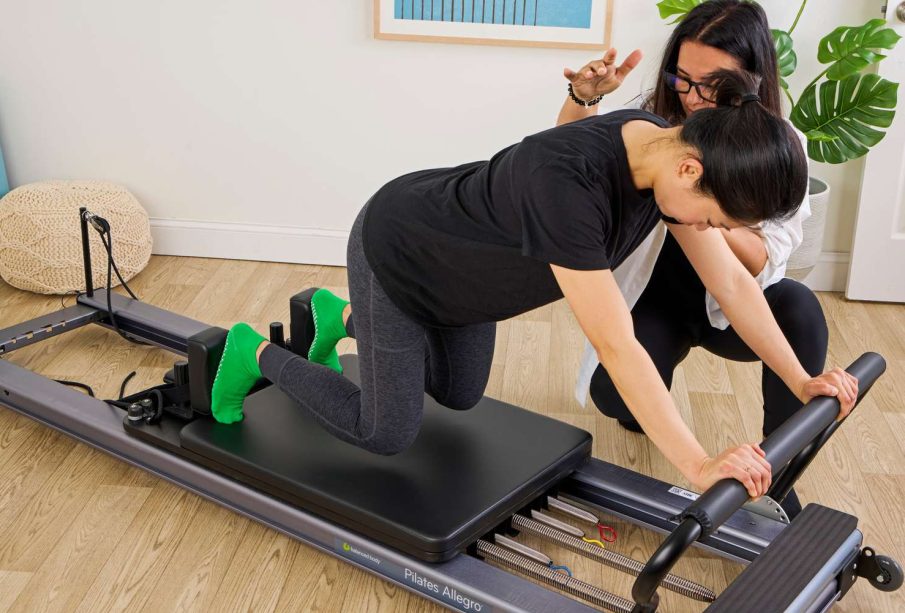
The Pilates reformer has been essentially unchanged in its fundamental design for nearly a century. Joseph Pilates’ original spring-resistance apparatus established the mechanical principles that contemporary reformers still follow: a sliding carriage, adjustable spring resistance, a footbar, and various attachment options that create the versatile training environment that has made the reformer one of the most therapeutically versatile pieces of exercise equipment ever developed. The mechanical ingenuity of the original design has endured because it is genuinely excellent.
What is changing is the data layer that is being added to this mechanical foundation. A new generation of pilates singapore studios in Singapore are beginning to work with sensor-equipped apparatus that captures force, velocity, range of motion, and symmetry data in real time, generating objective records of client performance that were previously available only through the subjective observation of the instructor. This data layer is creating new possibilities for precision instruction, objective progression tracking, and the kind of evidence-based programme adjustment that has historically required clinical measurement tools rather than studio equipment.
What Smart Reformer Technology Actually Measures
The sensor systems being integrated into advanced Pilates equipment capture several distinct categories of data that are relevant to both instruction quality and client outcome tracking.
Force measurement through load cells embedded in the spring attachment points provides objective data on how much resistance a client is working against and, more importantly, how that resistance varies through the range of a movement. A client whose force production drops significantly in the mid-range of a leg press movement while maintaining force at the start and end points is demonstrating a specific neuromuscular pattern that may indicate a muscle activation deficit, a movement avoidance strategy around a previously injured position, or a motor control limitation in that specific range. This information is invisible to a teacher observing the movement from outside but immediately apparent in the force curve data.
Velocity and acceleration measurement through inertial measurement units or optical position tracking captures how quickly and smoothly the carriage moves through its range, providing data on movement quality that complements the force data. Clients who are instructed to move at a controlled tempo but whose velocity data shows significant accelerations and decelerations are demonstrating less movement control than the observed tempo suggests. This discrepancy between apparent and actual movement quality is clinically relevant and allows more precise instruction than observation alone supports.
Symmetry measurement, comparing force and velocity data between left and right sides of the body, quantifies the asymmetries that teachers observe qualitatively but cannot previously document precisely. A client recovering from a right ankle injury who shows a consistent 15 percent force asymmetry favouring the left leg is demonstrating a measurable compensation pattern that can be tracked across sessions to monitor rehabilitation progress with objective precision.
How Singapore’s More Progressive Studios Are Using This Data
The studios in Singapore that have invested in smart equipment are developing usage models that go beyond simply collecting data to actually integrating it into instruction and programme design.
The most immediately practical application is session-by-session progression tracking. Having objective records of each client’s force output, range of motion, and movement quality at each session allows teachers to make progression decisions based on demonstrated performance trends rather than subjective impressions. A client whose force data shows consistent improvement over eight sessions has a clear evidence base for increasing spring resistance that is more precise than the teacher’s qualitative judgement alone.
Programme personalisation is a second high-value application. When a client’s data reveals specific movement quality deficits, such as a consistent asymmetry in a particular exercise, reduced force production in a specific range, or velocity patterns indicating inadequate movement control, these findings directly inform which exercises should be prioritised, modified, or temporarily avoided in that client’s programme.
Injury risk flagging is perhaps the most clinically significant application. Force asymmetries, sudden changes in force production patterns, or unusual velocity profiles can all serve as early indicators of emerging issues that the client may not yet be reporting as pain or discomfort. A teacher who is monitoring data trends across sessions may identify a developing problem well before it becomes a symptomatic injury, enabling preventive programme adjustment.
The Integration with Digital Health Records
For studios operating at the intersection of fitness and clinical rehabilitation, the ability to integrate smart equipment data with digital health records creates a continuous documentation system that serves both clinical and legal functions.
A physiotherapy patient who transitions from clinical rehabilitation to studio-based maintenance Pilates ideally carries a data record of their rehabilitation progress that informs how the studio programme is designed and progressed. Smart equipment data from the studio phase can then be shared back with the referring clinician, creating a closed-loop documentation system that maintains clinical continuity across the treatment and maintenance phases.
This integration requires both technical infrastructure, specifically compatibility between studio equipment data systems and clinical record systems, and professional collaboration frameworks that define who has access to what data and under what circumstances. Neither the technical nor the professional components are trivial to establish, but studios that have invested in both are providing a standard of care that is meaningfully superior to that available in conventional studio environments.
The Instructor Skill Development Dimension
An underappreciated benefit of smart equipment data in Pilates instruction is its contribution to instructor skill development. The discrepancy between what experienced teachers observe and what the data records is itself an educational signal. When a teacher judges a movement to be symmetrical and smooth while the force and velocity data reveals asymmetry and inconsistency, the discrepancy highlights a gap in the teacher’s observational skill that can be specifically addressed.
Over time, instructors who work regularly with data-instrumented equipment develop more precise observational skills because they receive regular objective feedback on the accuracy of their qualitative assessments. This feedback loop is not available in purely observation-based teaching environments, and the skill development it enables has direct benefits for the quality of instruction provided to all clients, including those on non-instrumented equipment.
Studios like Yoga Edition that invest in both the technological infrastructure of smart equipment and the professional development needed to use it well are building instructional capabilities that represent a genuine advance over conventional studio practice, positioning themselves at the frontier of evidence-based movement instruction in Singapore’s competitive wellness market.